



Wrestling is one of the most physically demanding sports there is. To succeed on the mat, you need not only technique and endurance but above all raw strength, explosiveness, and iron grip strength. Good strength training decides in close matches who can push through, lift, or control the opponent – and who cannot.
In this guide, we show you which exercises really work, what a sensible training plan for wrestlers looks like, and which common mistakes you should avoid. Whether you’re starting as a beginner or want to raise your level as a competitive wrestler – this article gives you a clear roadmap.
Why Strength Training Is So Crucial for Wrestlers
A wrestling match lasts two rounds of three minutes each (youth/adults) and places extreme demands on the body: You must perform explosive movements in fractions of a second, fight against your opponent’s resistance, and maintain your performance throughout the entire match. Without a solid strength base, this is simply not possible.
Additionally, targeted strength training significantly reduces the risk of injury. Many common wrestler complaints like unstable knee joints or overstrained shoulders can be greatly minimized through complementary strength training. You can find more about this in our article on Knee and Shoulder Problems in Wrestling.
The Most Important Muscle Groups for Wrestlers
Wrestling is a full-body sport – yet there are muscle groups that are especially challenged and should be trained accordingly:
- Legs (Quadriceps, Glutes, Hamstrings): For takedowns, lifting techniques, and stable defensive positions.
- Back (Latissimus, Rhomboids, Erector Spinae): For pulling through, underhooks, and standing control.
- Core Muscles: For stability in every position, especially on the mat.
- Neck: For bridges and preventing shoulder pinning.
- Forearms and Grip: Crucial for clinches, grabbing, and control.
- Shoulders and Chest: For pushing away, pressing, and ground techniques.
The 10 Best Strength Training Exercises for Wrestlers
The following exercises are especially effective because they closely replicate the movement patterns and stresses of wrestling – combining maximal strength, explosive power, and grip strength.
1. Squat (Back Squat)
The king exercise for every martial artist. Squats strengthen the entire leg muscles and core – indispensable for explosive attacks on the legs and a stable defensive stance.
2. Deadlift
Deadlifts train the back, glutes, hamstrings, and grip strength in a single exercise. Perfect for lifting techniques and escapes from the bottom.
3. Overhand Grip Pull-Ups
Better pull-ups = better pulls. Pull-ups train the latissimus, rhomboids, and grip strength simultaneously and almost perfectly replicate the pulling movement.
4. Dumbbell Bench Press
One of the best exercises for pushing movements against the opponent. Dumbbells are often preferable to classic barbells here because they protect the shoulder and engage stabilizers more.
5. Power Clean
Pure explosive power. The power clean trains the entire posterior chain and the ability to develop force quickly – exactly what you need for a leg attack.
6. Kettlebell Swings
One of the best exercises for hip explosiveness. Additionally, kettlebell swings train muscular endurance and grip strength simultaneously.
7. Farmers Walk
Take two heavy dumbbells or kettlebells and walk a set distance with them. One of the most effective exercises for grip strength and core stability ever.
8. Rope Climbing
Rope climbing is the ultimate wrestling training: grip strength, arm strength, and core stability in one exercise. If possible, without leg assistance – that adds significantly more challenge.
9. Neck Bridges
Wrestlers need an extremely stable neck to hold bridges and avoid shoulder pins. However, neck bridges should be built up carefully and only trained after thorough warm-up.
10. Hollow Body Hold
Classic core exercise from gymnastics that works excellently for wrestlers because it trains the entire front muscle chain simultaneously and builds the body tension you need in almost every wrestling position.
Sample Training Plan: Strength Training alongside Wrestling Training
This plan assumes you have wrestling training on the mat 2–3 times per week. The strength training is meant to support your mat performance, not replace it.
| Day | Focus | Exercises |
|---|---|---|
| Monday | Maximum Strength Lower Body | Squats, Deadlifts, Pull-Ups, Hollow Hold |
| Tuesday | Wrestling (Technique + Sparring) | Mat Training |
| Wednesday | Explosive Power & Conditioning | Power Clean, Kettlebell Swings, Box Jumps, Medicine Ball Throws |
| Thursday | Wrestling (Technique + Sparring) | Mat Training |
| Friday | Maximum Strength Upper Body + Grip | Bench press, pull-ups, farmers walk, rope climbing |
| Saturday | Competition simulation / wrestling | Mat training or competition |
| Sunday | Recovery | Mobility, stretching, light cardio |
Important: If you are new to wrestling, don’t overdo strength training. In the beginning, technique is the priority – how to start correctly is shown in our Beginner’s Guide to Wrestling.
Periodization: Strength training throughout the year
Your strength training should be oriented to the competition calendar. Roughly, the wrestling year can be divided into three phases:
| Phase | Time period | Training focus |
|---|---|---|
| Off-season | May – August | Muscle building & basic strength (higher volume, moderate intensity) |
| Pre-season | September – November | Maximum strength & explosive power (lower volume, higher intensity) |
| Competition season | December – April | Maintenance training, focus on freshness & technique |
Especially during the competition phase: less is more. Heavy sessions right before a tournament cost you energy you need on the mat. How a tournament day runs and what you should consider can be found in our article Wrestling Tournament Procedure.
Nutrition & recovery
Strength training only works if you give your body the building blocks to repair and build itself. The basic rules for wrestlers:
- Protein intake: About 1.6–2.0 g of protein per kilogram of body weight per day.
- Carbohydrates: Don’t exclude them – they are your most important energy source on the mat and in training.
- Sleep: 7–9 hours per night. Lack of sleep is one of the biggest strength killers.
- Mobility: 10–15 minutes of daily mobility work keeps joints and fascia flexible.
If you want to compete in a lower weight class, be especially careful not to lose muscle mass unnecessarily – radical weight loss right before competition almost always leads to strength loss and poorer performance.
The most common mistakes in strength training for wrestlers
We see these mistakes again and again – and they unnecessarily cost performance:
- Too much volume during competition phase: The body needs freshness for the mat, not just in the weight room.
- Overestimating isolation exercises: Bicep curls and leg extensions bring little benefit in wrestling. Focus on basic exercises.
- Neglecting neck training: A strong neck is mandatory – not a bonus.
- Too one-sided training: Many wrestlers neglect the back of the legs and rotational strength (important, for example, for throws).
- No periodization: Always training at the same intensity leads to stagnation and injuries.
- Don’t underestimate recovery: Muscles don’t grow during training but in the recovery phase.
The right equipment for strength training
Good strength training doesn’t require much – but the right clothing makes a noticeable difference. Important are:
- Functional sportswear: Breathable shirts and shorts that move with you and wick away sweat. Our Performance T-Shirt & Shorts Sets are designed exactly for this purpose.
- Sturdy shoes with flat soles: For squats and deadlifts, flat shoes or weightlifting shoes are better suited than classic running shoes.
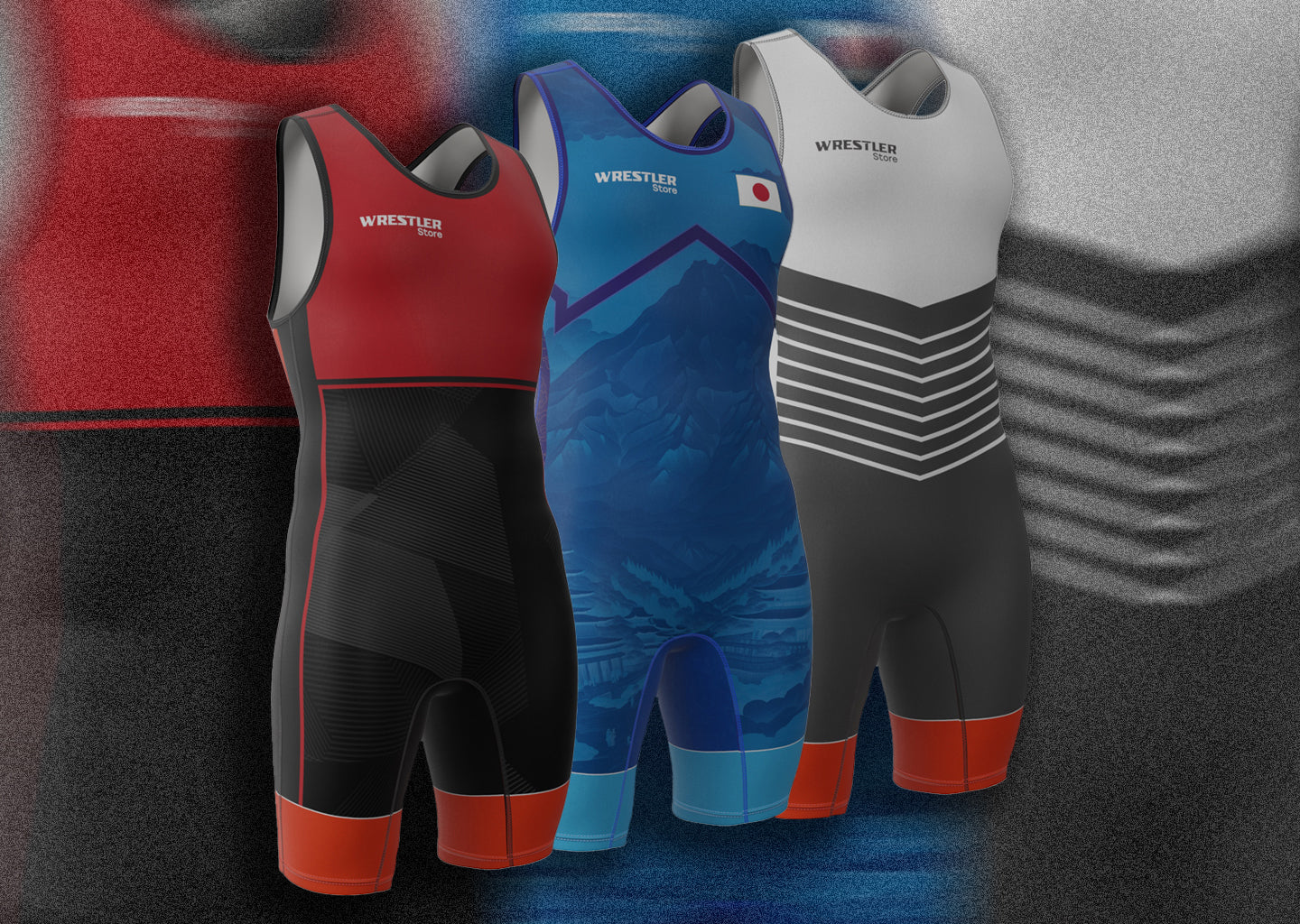
- Suitable competition gear: Regardless of strength training, you naturally need a suitable singlet and wrestling shoes for the mat. An overview can be found in our article The most important equipment for wrestlers.
Conclusion: Stronger wrestler = better wrestler
Strength training is not an end in itself but a tool to improve on the mat. Those who know the right exercises, follow a well-thought-out training plan, and observe periodization will develop significantly more explosiveness, grip strength, and stability over the months. These are exactly the qualities that decide close matches.
Start with the basic exercises, gradually increase volume and intensity, and pay attention to your recovery. If you want to dive deeper into the world of wrestling, also check out our overview of the wrestling rules and the current weight classes 2026 – a good understanding of the competition structure will help you tailor your training accordingly.
Further official information about wrestling can be found at the German Wrestling Federation (DRB) as well as at the world federation United World Wrestling (UWW).


