



You want to start wrestling but don’t know where or how? Then you’re in the right place. Wrestling is one of the oldest and most versatile sports in the world – and getting started is easier than many think. Whether you’re 8 or 38: this guide covers everything beginners need to know – from finding a club to the first training session and the right equipment.
Note: This article is aimed at absolute beginners (children, teens, and adults). For specific competition topics like tournament procedures or jersey rules, you’ll find further links at the end.
Why wrestling? 7 reasons to choose the sport
Wrestling trains the whole body – and the mind too. Here are the key benefits at a glance:
- Full-body workout: Wrestling engages almost all muscle groups – legs, back, shoulders, core, and arms work together constantly.
- Coordination & body awareness: You learn to control your body in all positions – standing, on the ground, in motion.
- Mental strength: Wrestling demands discipline, quick decisions, and handling pressure – qualities that help off the mat as well.
- Self-confidence: Those who train regularly and hold their own in matches gain noticeable self-confidence.
- Community: Wrestling clubs are known for strong camaraderie – from beginner training to the Bundesliga.
- Competition opportunities: From local tournaments to the German Championship – anyone who wants can compete at every level.
- For all ages: Kids often start at 5–6 years old; adults can easily start at 20, 30, or 40+.
Freestyle or Greco-Roman? The two styles explained
Olympic wrestling has two styles. For beginners, it’s helpful to know the difference – even though most clubs initially train both styles together.
| Characteristic | Freestyle | Greco-Roman |
|---|---|---|
| Attack zones | Whole body – legs can also be attacked | Only above the waist – no leg attacks allowed |
| Typical moves | Leg attacks (Single/Double Leg), sprawls, versatile takedowns | Throws, lifts, ground turns, upper body techniques |
| Body type advantage | Agile, fast athletes often benefit | Strong upper body and good hip work are key |
| Distribution (DE) | Widespread, especially among women and internationally | Traditionally strong in Germany (Bundesliga, team competitions) |
Tip: At the beginning, you don’t have to commit right away. Most clubs offer mixed training where you can get to know both styles.
How to find a wrestling club – here’s how to proceed
The most important step is to find a club near you. Wrestling is almost exclusively trained in clubs – practicing alone at home is hardly possible (and not recommended).
- DRB Club Search: On the website of the German Wrestling Federation (DRB) you will find regional associations and their club lists.
- Google Maps / Local Search: Search for “wrestling club + [your city]” – many clubs have their own websites with training times.
- Trial Training: Almost every club offers free trial training. Just contact them by email or phone and come by.
- Costs: Membership fees are usually between €10 and €30 per month – wrestling is one of the most affordable sports.
Your First Training: What to Expect
The first training can be exciting – but don’t worry: beginners are warmly welcomed everywhere. This is how a typical wrestling training session goes:
- Warm-up (15–20 min): Running, coordination exercises, gymnastics, partner drills.
- Technique Training (20–30 min): The coach demonstrates techniques (e.g., takedowns, mat turns) which you then practice with a partner.
- Wrestling / Sparring (15–20 min): Light practice matches – usually with more experienced training partners who help you as a beginner.
- Strength & Finishing (10–15 min): Bodyweight exercises (push-ups, squats, pull-ups) and stretching.
What to bring to your first training:
- Sportswear (T-shirt and shorts are enough for the beginning)
- Indoor shoes or barefoot (you don’t need wrestling shoes immediately)
- Towel and water bottle
- Openness and eagerness to learn something new
The Right Equipment for Beginners
One of the big advantages of wrestling: you need hardly any equipment at the start. But if you stick with it, a gradual investment in your own gear is worthwhile.
1) Wrestling Shoes – Your Most Important Equipment
Wrestling shoes give you grip on the mat, protect your ankles, and allow quick changes of direction. For beginners, lightweight, flexible models with good grip are recommended.
- When to buy? At the latest after 2–4 weeks of training, when you know you will stick with it.
- What to watch for? Fit, sole profile, ankle support. Japanese ASICS models are considered a benchmark.
- Learn more: Wrestling Shoes Buying Guide – Beginners to Pros
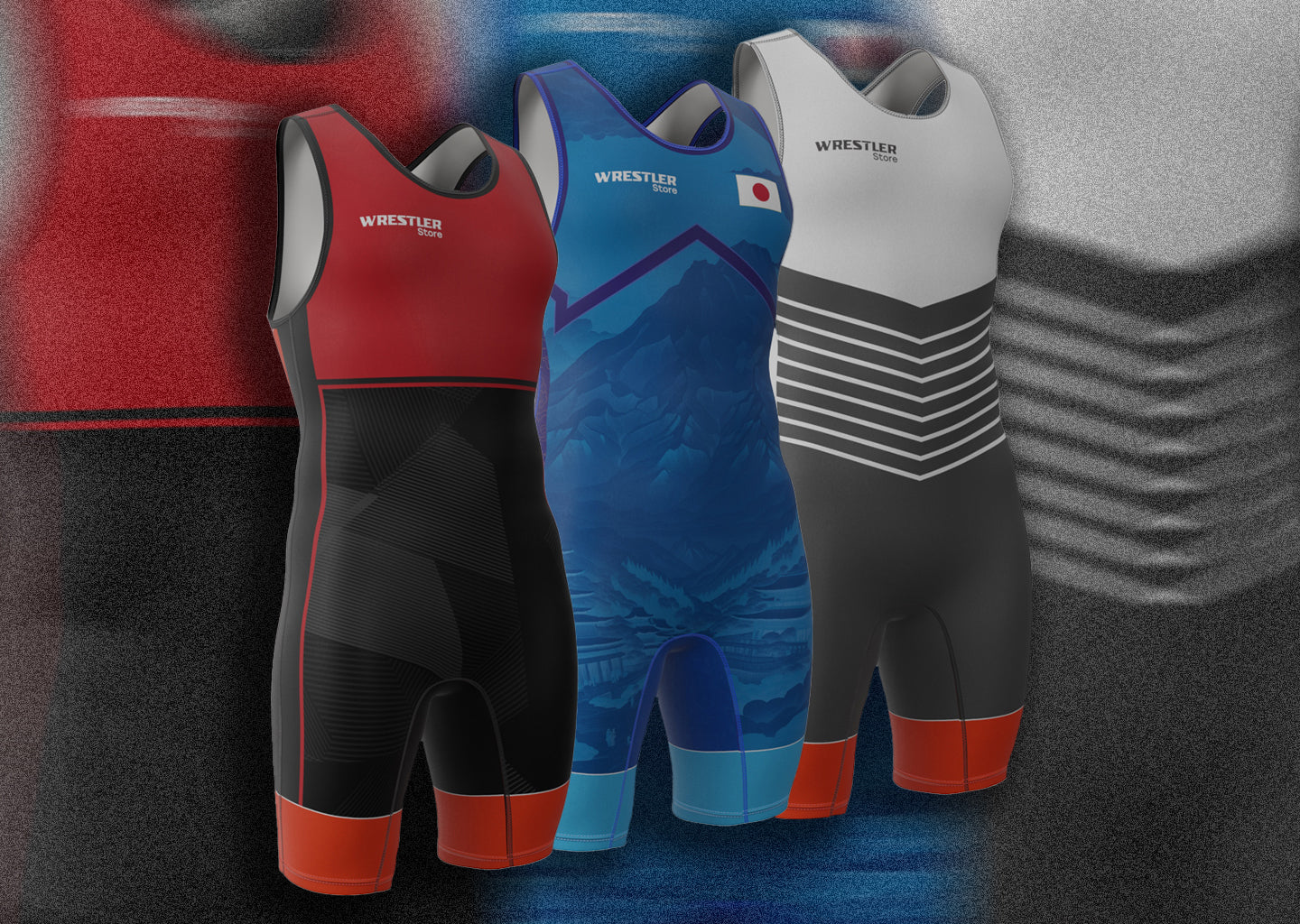
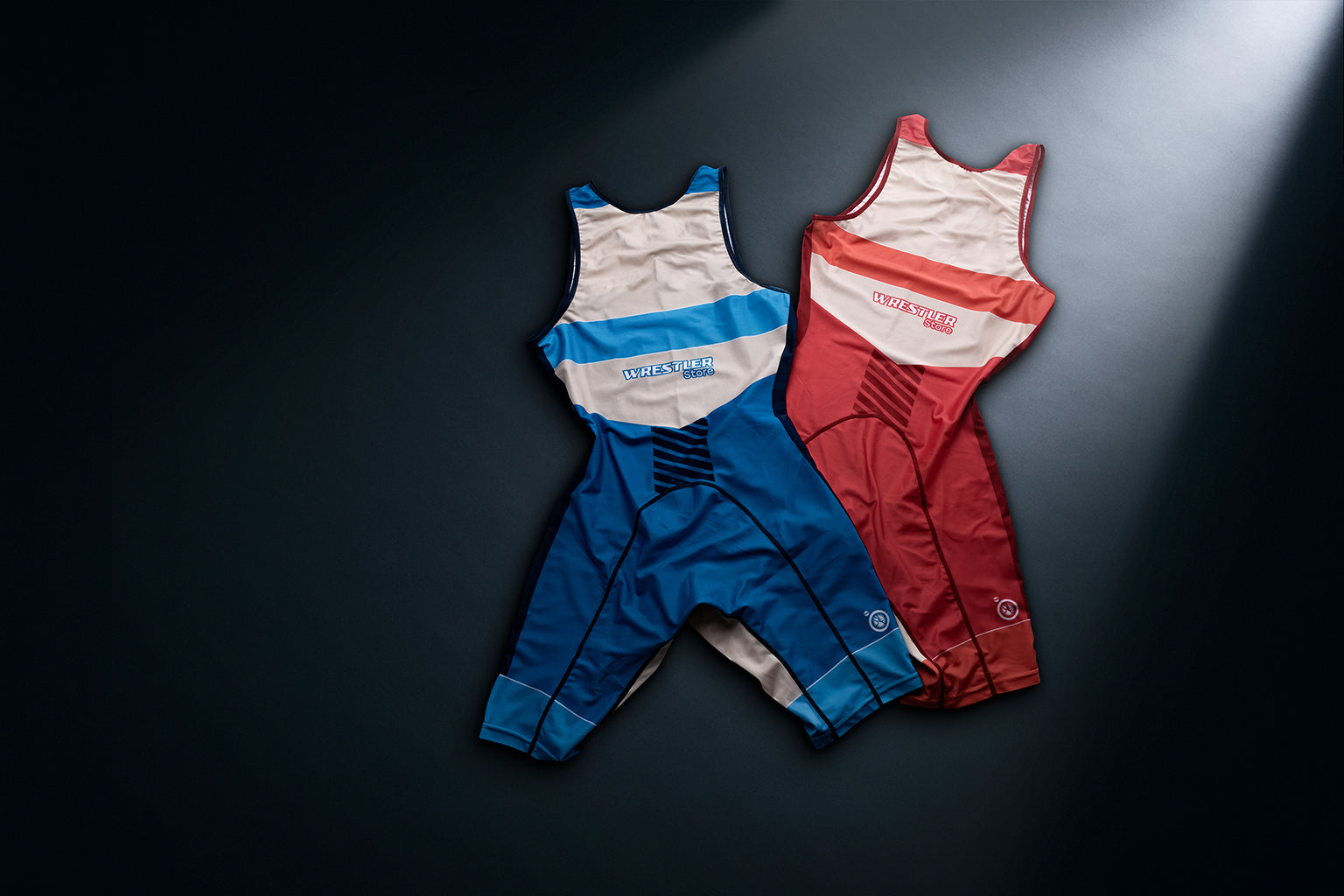
2) Wrestling Singlet – for Training and Competition
A wrestling singlet is mandatory at every competition and is also often worn during training. It fits tightly so the opponent cannot grab any fabric.
- When to buy? As soon as you want to participate in your first tournament.
- What to watch for? Fit, UWW-compliant colors (red/blue), freedom of movement.
- Personalization: Many wrestlers have their name printed – at WrestlerStore, this is included with every singlet.
- Learn more: Calculate Wrestling Singlet Size (2026)
3) Additional Equipment
- Knee Pads: Optional, but helpful at the beginning when knees aren’t yet used to mat work.
- Ear Guard: Not mandatory everywhere, but recommended – especially if you train frequently and want to prevent cauliflower ear.
- Tape: For taping fingers or joints, as needed.
Complete Overview: The Most Important Equipment for Wrestlers – From Head to Toe
Typical Beginner Mistakes (and How to Avoid Them)
- Too Much Strength, Too Little Technique: Beginners often try to solve everything with muscle power. Good technique always beats raw strength. Listen to your coach and practice movements cleanly.
- Irregular Training: Twice a week is the absolute minimum. Those who want to progress should plan 3–4 sessions.
- Fear of Ground Fighting: Many beginners feel uncomfortable on the mat at first. That’s normal – it gets better with every training session.
- Poor Nutrition: Wrestling is intense. Make sure to get enough protein and carbohydrates. Don’t experiment with weight cutting before mastering the basics.
- Giving Up Too Soon: The first weeks are tough – you will lose to everyone. That’s part of it. Most wrestlers say: After 3 months, it’s really fun.
Starting Wrestling as an Adult – Is It Possible?
Yes, absolutely. There is no age limit for wrestling. Of course, you won’t immediately keep up with someone who has trained since childhood – but that’s not the point. Many clubs have adult groups or easily integrate late starters into regular training.
What You Should Keep in Mind as an Adult Beginner:
- Increase Slowly: Tendons and joints need time to adapt to new stress.
- Train Mobility: Stretching and warming up are even more important for adults than for kids.
- Take Prevention Seriously: Regularly include knee and shoulder exercises (Prevention Tips for Wrestlers).
- Have Fun: You don’t have to win championships. Training, fitness, and community are reason enough.
Wrestling for Kids – From What Age?
Most clubs offer training from ages 5–6 (often called “Bambini Wrestling” or “Mini Wrestlers”). At this age, playful roughhousing, coordination, and body awareness are the focus – no tough competition.
- Benefits for Kids: Confidence, discipline, respect, joy of movement, social skills.
- First Competition: Typically from ages 8–9, depending on the club and development level.
- Tournament Info for Parents: Wrestling Tournament Process – Weigh-in, Weight Classes, Packing List
How quickly do you make progress?
Everyone learns at a different pace – but here’s a rough guide:
| Timeframe | What you typically can do |
|---|---|
| After 1 month | Basic stance, simple standing attacks, first ground exercises, understand sequences |
| After 3 months | Apply 2–3 techniques confidently, understand sparring sequences, first tournament possible |
| After 6 months | Solid basic technique, tactical understanding develops, regular tournament participation |
| After 1–2 years | Good technical base, own fighting style develops, performance level becomes clear |
Equipment Checklist for Beginners
| Equipment | When do you need it? | Recommendation |
|---|---|---|
| Sportswear | Immediately (first training) | T-Shirt + Shorts are enough |
| Wrestling Shoes | After 2–4 weeks | ASICS EX-EO Wrestling Shoes |
| wrestling singlet | Before the first competition | WrestlerStore Wrestling Singlets |
| Knee Pads | Optional, from week 1 | Simple volleyball knee pads are enough at first |
| Ear Protection | Recommended from regular training onwards | Available in many sports stores |
| Training Set (T-Shirt & Shorts) | For regular training | WrestlerStore T-Shirt & Shorts Sets |
FAQ: Common Questions About Starting Wrestling
Am I too old to start wrestling?
No. There is no age limit. Many wrestlers start as adults and have great fun – whether as fitness training, hobby, or even competing in their own age class.
How much does wrestling cost in a club?
Membership fees are usually between €10 and €30 per month. One-time costs include wrestling shoes (from about €100) and a wrestling singlet (from about €60). Compared to many other sports, wrestling is very affordable.
Do I need prior knowledge or to be fit?
No. You don’t need experience or special fitness. Training builds you up step by step. Everyone starts from zero.
Is wrestling dangerous?
Wrestling, like any contact sport, carries some injury risk – but it’s more controlled than many think. Training focuses on safety, and beginners are introduced gradually. With the right technique, warm-up, and prevention, the risk can be significantly minimized.
Is there wrestling for women too?
Absolutely. Women’s wrestling is Olympic and growing worldwide. Many clubs have mixed or women-only training groups. There are also now special products for equipment – e.g., wrestling singlets with women-specific cuts.
How do I find a wrestling club near me?
Easiest through your national federation’s website (via the DRB) or a local Google search for “wrestling club + [your city]”. Almost every club offers free trial training.
Further Articles:


